
3 min read
Embroidery has come a long way—from hand stitching to a modern and creative way to decorate fabric. It’s used in everything from fashion and home decor to logos and custom clothing. Whether you’re doing it for fun or investigating the technique for business apparel, learning the basics is the first step to creating great-looking designs. When you know the right embroidery techniques, your designs will look cleaner, last longer, and really stand out. Here’s a simple guide to help you get started with neat, professional-looking embroidery.
Start Strong: Choosing the Right Fabric and Stabilizer for Embroidery
The first step to great-looking embroidery is picking the right fabric. Different fabrics react differently to stitching, and understanding their behavior can help you avoid issues such as bunching, tearing, or stretching. Fabrics like cotton or linen are perfect. They’re tightly woven and easy to work with. Softer or stretchy fabrics, such as knits, require a little extra help to maintain their shape. That’s where stabilizers come in.
Stabilizers are materials you place under or around your fabric to keep it steady while you stitch. There are a few types—tear-away, cut-away, and wash-away—and each works best with certain fabrics and designs. Choosing and using the right stabilizer is key to making sure your embroidery turns out smooth, clean, and professional.
Mastering the Basics of Machine Embroidery Techniques
Machine embroidery techniques differ from hand stitching, but they still require the right skill and training. One of the most critical parts is digitizing, which means turning your design or image into a digital file that your embroidery machine can read. The file tells the machine exactly how to stitch the design: what type of stitches to use, how close they should be, and which direction to go.
If the digitizing isn’t done well, the thread might break, the stitches can look messy, or the design may not turn out as intended. That’s why learning how to use digitizing software properly is so important.
Another key step is hooping, securing your fabric and stabilizer in the embroidery hoop. If it’s too loose or too tight, the fabric may shift while the machine is stitching, which can disrupt your design. Getting the hooping just right helps make sure your embroidery looks clean and professional.
Thread and Needle Embroidery Techniques
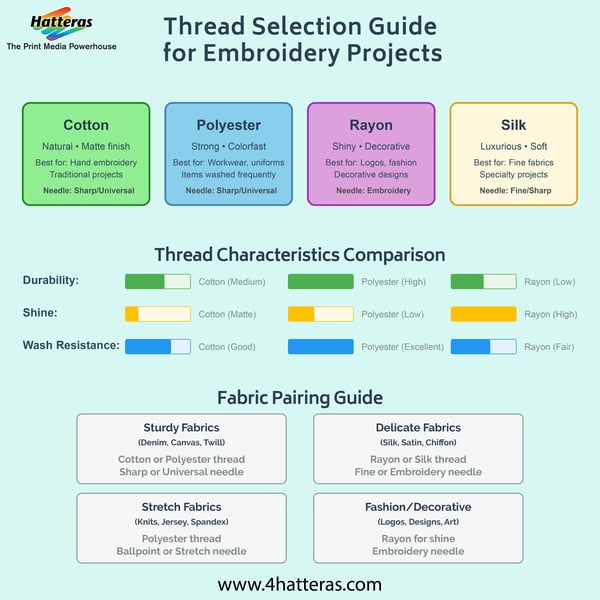
Picking the right thread is a big part of making your embroidery look great. Threads are available in various materials, including cotton, polyester, rayon, and silk, each with its unique strengths. Rayon has a nice shine, making it ideal for decorative designs. Polyester is extremely strong and retains its color well, making it ideal for items that are frequently washed. Choosing the right thickness and color of thread helps your design look clean and sharp.
Just like thread, using the right needle makes a big difference. Different fabrics need different types of needles. For example, sharp needles work best with firm fabrics like cotton, while ballpoint needles are better suited for stretchy materials like knits, as they slide between the threads without causing damage.
Matching the needle size to the thread and fabric you're using is another important embroidery technique. Using the wrong needle can lead to bad stitches, fabric damage, or even a broken machine. And don’t forget, needles wear out over time, so change them regularly to keep your embroidery smooth and problem-free.
The Final Touch
Finishing your embroidery correctly makes it look clean and professional. Once the stitching is done, the stabilizer is carefully removed. The back of the design is gently wiped with a cloth on top to protect the stitches. These small finishing steps might seem simple, but they make a big difference. Taking the time to clean up the stabilizer can help your work stand out from others that may look messy or rushed.
Hatteras Knows the Top Embroidery Techniques
Great embroidery isn’t just about creativity; it’s also about using the right tools, materials, and embroidery techniques. From picking your fabric and stabilizer to stitching and finishing your design, every step counts. Ready to take your embroidery to the next level? Contact Hatteras today; we’re here to help with expert advice and everything you need to bring your ideas to life.

Related Posts
The Best Choice for Shirt Embellishments: Apparel Embroidery
Embroidered apparel has stood the test of time as a superior choice for shirt embellishments,...
Which one is Right for your Brand | Embroidery vs Screen Printing
When customizing gear like t-shirts, hats, jackets, or tote bags, you’ve probably heard about two...
Tips for Choosing the Right Fabric, Fit, and Stitch: Hoodie Design 101
From lazy Sunday staples to go-to branded merchandise, the hoodie has officially earned its spot in...